Three reasons the Rapid PCR MRSA Swab (Single Site) test is right for you
- This test rapidly detects MRSA (Methicillin-resistant Staphylococcus aureus) from a single swab site
- It helps identify MRSA colonisation early so appropriate infection control measures can be taken
- Rapid PCR technology provides faster and highly accurate results compared with traditional culture methods
What is the Rapid PCR MRSA Swab (Single Site) test?
The Rapid PCR MRSA Swab test checks for the presence of Methicillin-resistant Staphylococcus aureus (MRSA), a type of bacteria that is resistant to many commonly used antibiotics. MRSA can colonise areas of the body such as the nose, throat, skin, or wounds without causing symptoms, but it can also lead to serious infections if it enters the body.
This test uses a swab taken from one site of the body, which is then analysed using PCR (Polymerase Chain Reaction) technology. PCR detects the DNA of MRSA bacteria, allowing for rapid and highly sensitive identification.
What are the risks of MRSA colonisation?
Many people carry MRSA without any symptoms, but colonisation can increase the risk of infection, particularly if you have wounds, a weakened immune system, or require medical procedures. Potential risks include:
- Skin and soft tissue infections
- Surgical site infections
- Bloodstream infections
- Spread of MRSA to others in healthcare or close-contact environments
How does the Rapid PCR MRSA Swab test work?
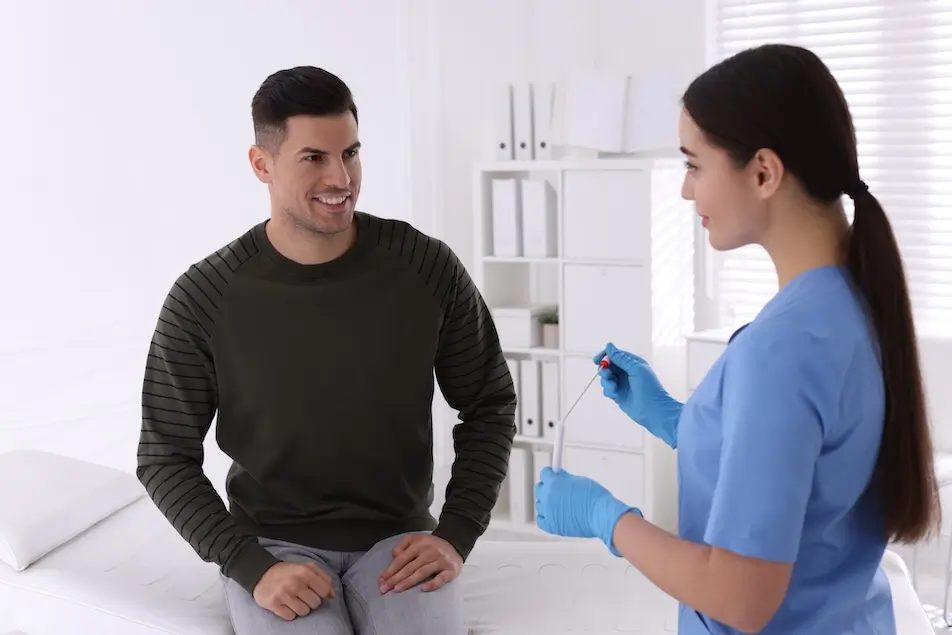
A trained healthcare professional will take a swab from the chosen site, such as the nose, throat, skin, or wound area. The swab is sent to an accredited laboratory where PCR technology is used to detect the genetic material of MRSA bacteria.
This rapid testing method allows for much faster detection compared with traditional bacterial culture techniques.
What can I expect at my appointment?
Your appointment will involve a quick swab of the selected area. The procedure is simple, safe, and usually takes only a few minutes to complete.
The sample will then be analysed in the laboratory. Results are typically available quickly, allowing prompt action if MRSA is detected.
Will I have a bad reaction to the test?
This is a very safe and non-invasive test. Most people experience little to no discomfort during the swab.
In some cases, there may be slight temporary irritation at the swab site, but this resolves quickly and does not cause any lasting effects.
How do I schedule my test appointment?
To book your appointment, please click the "Book Your Appointment" button at the top of the page. Select a suitable clinic, date, and time that meets your needs.
Description provided by Better2Know.